







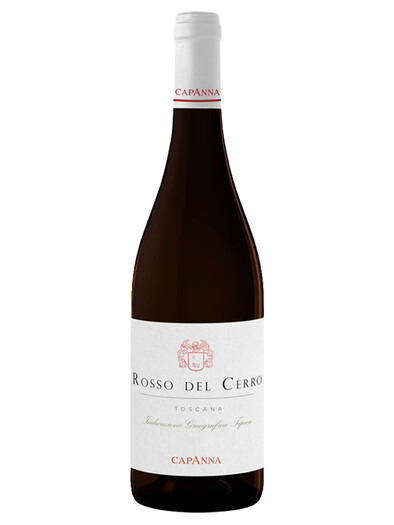
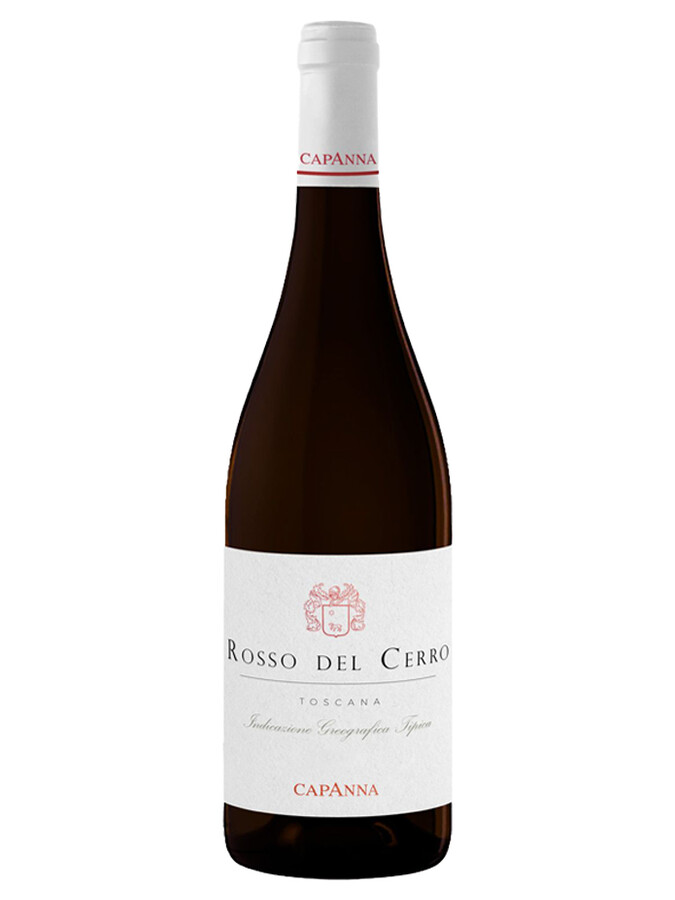
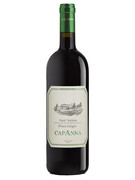
Rosso del Cerro Toscana IGT 2023 - Capanna x 6

Data sheet
-

- Cellar
- Capanna
-

- Region
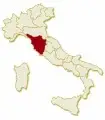
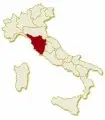
- Toscana
-

- Name
- Toscana IGT
-

- Year
- 2023
-

- Blend
- 100% Sangiovese
-

- Gradation
- 14.50%
-

- Size
- 75cl
-

- Temperature
- 16-18°C
-

- Allergens
- Contains sulphites
Why the winemaker recommends Capanna Rosso del Cerro Toscana IGT 2023
Some bottles are born to defy the decades, while others are conceived to capture the dazzling beauty of a moment. The Rosso del Cerro Toscana IGT 2023 belongs to the latter category. This blend, predominantly Sangiovese (over 90%) complemented by a small balance of complementary varietals, represents the most immediate, fresh, and proud interpretation of the historic Capanna estate.
Founded in 1957 by the Cencioni family on the famous and ideal hill of Montosoli, on the northern slope of Montalcino, the winery cultivates its vines in a protected continental microclimate. The marly, skeletal-rich soils impart a natural minerality to the wine.
Thermo-regulated alcoholic fermentation is combined with medium-long maceration on the skins in stainless steel tanks, where spontaneous malolactic fermentation also occurs. Subsequently, the grapes are transferred to large Slavonian oak barrels (20 to 32 hectoliters). This aging in large oak barrels allows for optimal tannic maturation without ever releasing invasive toasted notes, completing the cycle with a brief aging in the bottle.
Characteristics of the Rosso del Cerro di Capanna wine
In the glass, the wine expresses all the winery's meticulous production, revealing itself as a red of extraordinary versatility and immediate pleasure:
- Appearance: It presents a clear and brilliant ruby red, reflecting a youthful energy. The alcohol content is around 13.50% vol.
- On the Nose: It offers a crisp explosion of small red fruits, fresh cherry, wild strawberry, and blueberry, enriched by balsamic notes, nuances of plum, and subtle hints of spice.
- On the Palate: The vibrant acidity typical of the northern sector of Montalcino supports a medium, agile, and smooth structure. The tannin is subtle, subtle, and silky, leading the palate to a clean, savory finish. It has an estimated bottle aging potential of 5 to 10 years.
Recommended pairings for Rosso del Cerro Toscana IGT
Rosso del Cerro from the historic Capanna winery expresses a boundless culinary vocation, proving to be a strategic all-purpose bottle for traditional, eclectic, or fusion menus:
- Asian Meat Cuisine: Thanks to its freshness, it perfectly contrasts the sweetness and fatty component of dishes such as Peking duck, pork ribs in sweet and sour sauce, and Chinese dumplings (jiaozi) stuffed with pork and ginger.
- Mexican and South American Cuisine: The medium body and silky tannins integrate beautifully with the spicy complexity of chili con carne, the richness of beef tacos, and the The succulence of grilled picanha with chimichurri sauce.
- Structural Vegetarian Options: Enhances the sweet and earthy flavors of dishes like artichoke lasagna, pumpkin flan with Parmesan fondue, eggplant parmigiana, and chickpea or lentil burgers with smoked sauces.
- Street Food Gourmet: Vibrant acidity is a winning combination with club sandwiches, aged beef burgers with cheddar cheese, or a contemporary pizza with mushrooms and sausage.
- Traditional and Remembrance Dishes: It elegantly accompanies winter and mountain dishes such as polenta concia with melted mountain cheeses, cheese dumplings in broth, and potato gnocchi with butter and Sage.
Serving Temperature and Glass Choice
The optimal serving temperature for this Tuscan red is between 16-18°C. This precise temperature management allows the crisp notes of small red fruits to express themselves with maximum precision, preventing the alcohol from overpowering the delicate olfactory bouquet.
For proper tasting, we recommend following these guidelines:
- The right glass: We recommend a medium-sized red wine glass, such as the classic Bordeaux glass or a wide tulip glass.
- The advantages of the shape: This geometry allows for perfect oxygenation of the wine, channeling the fruity aromas directly to the nose and directing the sip to the center of the tongue to enhance the softness of the tannins.