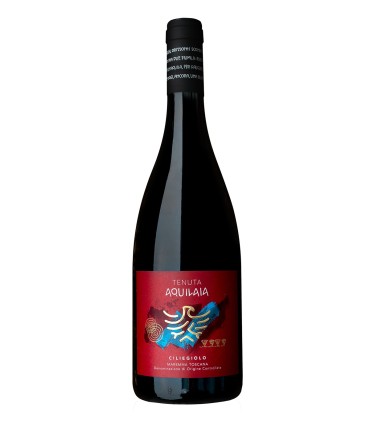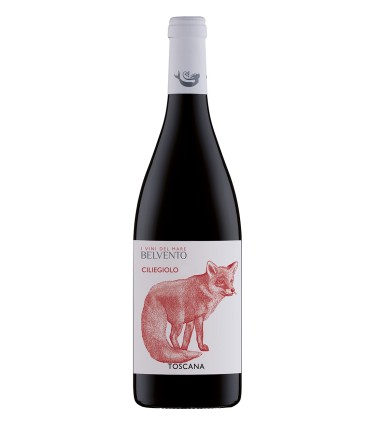








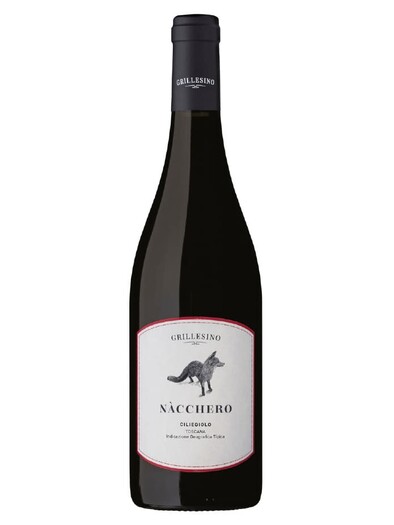
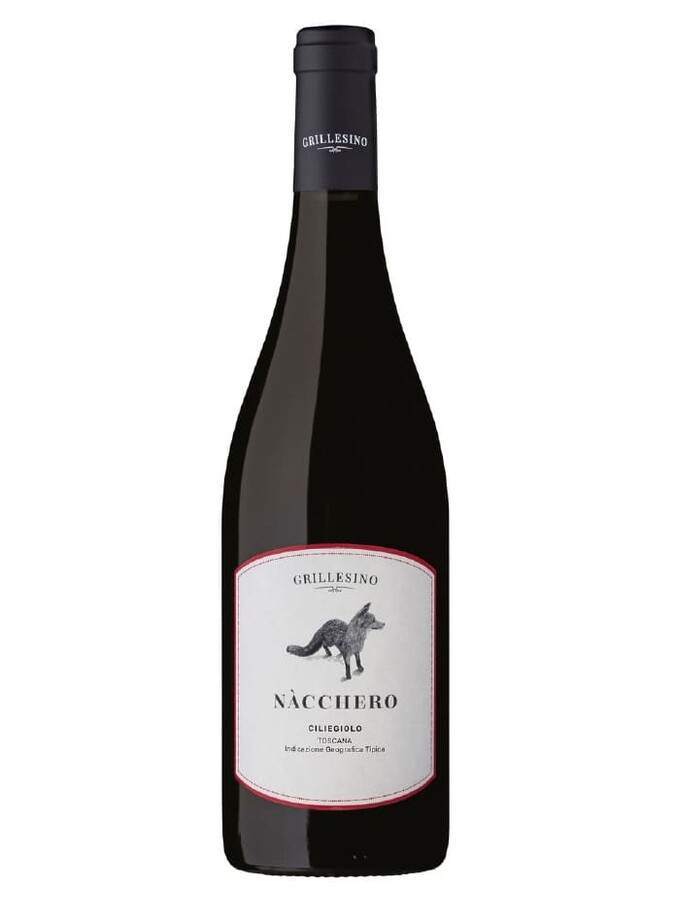
Nacchero Ciliegiolo Toscana IGT - Grillesino x 6


Data sheet
-

- Cellar
- Grillesino
-

- Region
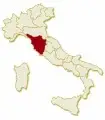
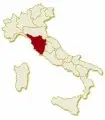
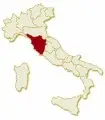
- Toscana
-

- Name
- Toscana IGT
-

- Year
- 2025
-

- Blend
- 100% Ciliegiolo
-

- Gradation
- 14.50%
-

- Size
- 75cl
-

- Temperature
- 12-14°C
Why the winemaker recommends Grillesino Nacchero Ciliegiolo Toscana IGT
Ciliegiolo is historically linked to Tuscan sharecropping. For generations, winemakers have cultivated it because it ripens earlier than Sangiovese. This allowed farming families to have grapes ready for harvest before the great autumn harvests. These grapes were often used to produce a fresh, fragrant, ready-to-drink wine that supported their work in the fields.
Its historical importance lies precisely in this dual nature: a grape for immediate everyday consumption by farmers and an enhancer in noble blends, adding color and aroma.
The Maremma winemaking transition
The project that gave birth to this bottle can be traced back to the late 1990s and early 2000s. During that period, the Maremma was experiencing a true winemaking renaissance. Great Italian wine families understood that this land, until then considered marginal and tied to purely quantitative production, possessed enormous qualitative potential thanks to its proximity to the sea and the nature of its soils.
The birth of Nacchero is part of a specific historical current of thought: the rediscovery of native grape varieties. Rather than succumb to the trend for international varieties like Cabernet or Merlot, which was very popular in Tuscany at the time, the technical choice was to isolate Ciliegiolo. It was freed from the old cellar practices that viewed it only as a raw blending grape, giving it full dignity as a solo varietal through the exclusive use of stainless steel.
Characteristics of Ciliegiolo Nacchero di Grillesino
Grillesino Nacchero Ciliegiolo Toscana IGT represents a high-level technical expression dedicated to professionals and experts in the winemaking sector. This label was created to enhance the authenticity of a terroir through rigorous winemaking.
The visual profile reveals a clear and luminous ruby red color. On the nose, the organoleptic analysis highlights distinct notes of Marasca cherry that blend with typical nuances of the Mediterranean scrub and subtle spicy notes.
On the palate, the wine is distinguished by a marked freshness and vibrant structure. The production focuses on the enhancement of pure Ciliegiolo to highlight the varietal characteristics of the Maremma grape. The decision to avoid wood aging in favor of stainless steel preserves the integrity of the fruit.
This approach guarantees a vertical, taut sip supported by a solid acidity that gives dynamism to the drink. The flavor highlights the savory character typical of the soils of origin and a dry, clean finish. The tannic structure is dense but well-integrated, offering an overall picture of great winemaking coherence.
This is a wine with character, ideal for those seeking the technical essence of the Tuscan terroir.
Recommended pairings for Rosso Toscana IGT
The food pairing of Grillesino Nacchero Ciliegiolo Toscana IGT should enhance its specific technical identity, characterized by the absence of wood aging, a pronounced acidity, and a dense yet youthful tannic texture. The strategic focus is on dishes that require freshness to balance the fatty component, without overpowering the delicate fruit.
Traditional Tuscan meat-based preparations
The wine's vertical profile pairs ideally with red meats and feathered game, provided they are cooked using methods that preserve the juiciness of the raw material:
- Grilled Maremma Scottona: The freshness of the Ciliegiolo counteracts the sweetness of the meat. The tannins cleanse the palate of the grease from the grill.
- Roast pigeon with aromatic herbs: The wine's notes of Mediterranean scrub recall the aromas of the recipe. The subtle structure respects the finesse of the meat.
- Peposo alla fornacina: The light spiciness of the wine complements the black pepper in the dish. The acidity cuts the succulence of the long cooking process.
Strong-bodied cured meats and medium-aged cheeses
The balance of flavors is excellent when paired with local cured meats and cheeses, where the contrast between saltiness and acidity is crucial:
- Hand-cut Tuscan DOP Ham: The intense saltiness and fatty presence of the cured meat are balanced by the liveliness and dry finish of the sip.
- Medium-aged Tuscan DOP Pecorino: The wine supports the structure of the cheese without overpowering its lactic component, thanks to a taut and never heavy body.
- Finocchiona IGP: The typical aroma of fennel seeds harmonizes with the vegetal and spicy notes of the grape vinified in Steel.
First courses of local cuisine
First courses rich in flavorful local condiments enhance the drinkability of this pure blend:
- Tortelli Maremmani with Cinta Senese ragù: The pasta dough and ricotta filling find the perfect acidic counterpoint in the wine, while the ragù ties in with the structure of the grape variety.
- Pappardelle with hare sauce: The aromatic persistence of the dish is balanced by the fruity and profound component of the Ciliegiolo.
Temperature and serving protocol
The serving protocol for Grillesino Nacchero Ciliegiolo Toscana IGT is defined by rigorous temperature parameters and precise management of the bottle from the moment it is opened to being poured into the technical glass. Ideal.
The optimal serving temperature is set between 14-16°C. The ideal glass is a medium-sized red wine glass, characterized by a moderate bowl and a straight opening. This specific geometry conveys the varietal aromas of Ciliegiolo to the nose and directs the flow of wine evenly across the palate, enhancing the cleanliness of the sip and the texture of the tannins.
Opening and Oxygen Management
The bottle should be uncorked between 15 and 30 minutes before serving. This waiting time allows the wine to reach the correct equilibrium with atmospheric oxygen immediately after opening, releasing the primary aromas derived from the vinification in steel. Wine should be served directly from the bottle, avoiding the use of a decanter or other forced decanting devices.
Cut the cork and pour
The protective cork should be cut below the lower ring of the bottle neck. This prevents the wine from touching the cork residue during service. After removing the cork, the inside and rim of the bottle neck should be thoroughly cleaned with a cloth napkin before filling the glasses.