







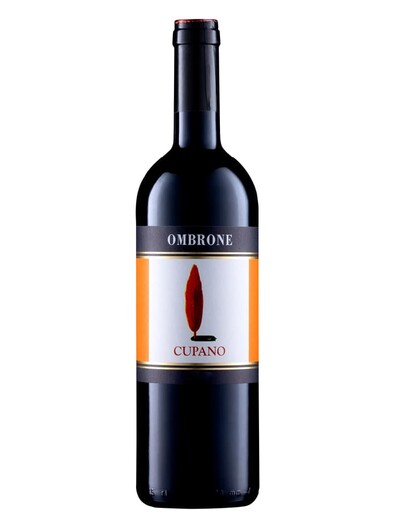
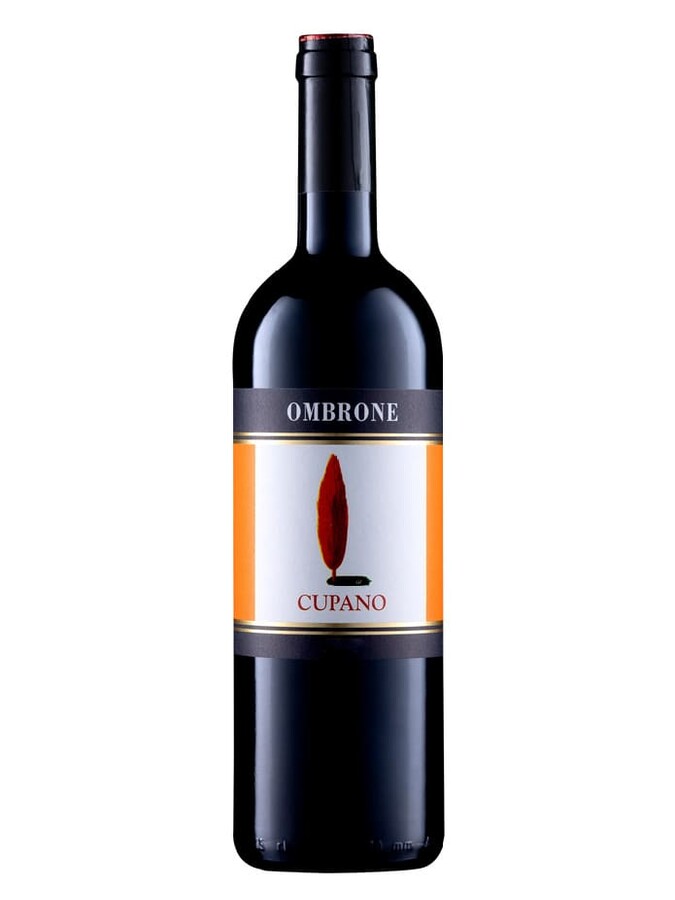
Ombrone Sant'Antimo DOC 2022 - Cupano x 6
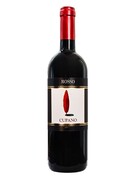


Data sheet
-

- Cellar
- Cupano
-

- Region
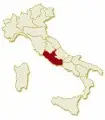
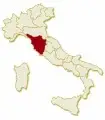
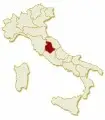
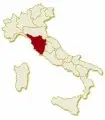
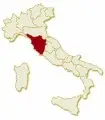
- Toscana
-

- Name
- Sant'Antimo DOC
-

- Year
- 2022
-

- Blend
- Cabernet Sauvignon e Merlot
-

- Gradation
- 14.00%
-

- Size
- 75cl
-

- Temperature
- 16-18°C
Why the Winemaker Recommends Cupano Ombrone Sant'Antimo DOC 2022
The Cupano winery is not merely a place where wine is produced; it is a manifesto of cultural and artisanal resistance, a microcosm suspended above a hill of clay and pebbles overlooking the flow of the Ombrone River in Montalcino. Born from the visionary dream of Ornella Tondini and Lionel Cousin, this estate escapes the logic of industrial production and immediate consensus. Here, the land is not tamed but rather assisted through a rigorous, almost spiritual organic and biodynamic agriculture. The vineyard breathes the winds rising from the sea, sinks its roots into ancient soils, and yields grapes charged with an ancient energy.
Cellar Notes: The Expansion of Time and Natural Winemaking
In the cellar, time expands. Spontaneous fermentations with indigenous yeasts and long aging in French oak take place without haste, under the watchful eye of those who know that perfection resides in patience rather than chemistry. There is no search for a reassuring softness at all costs, but rather the authenticity of the grape variety and the vintage, accepting even the youthful edges that transform into noble complexity over time. Every bottle signed by Cupano carries this philosophy: an artisanal luxury made of subtraction, respect, and a profound connection with the earth. A free, proud wine, designed for those who seek a story to listen to in the glass, and not just a product to consume.
Sensory Profile of Cupano Ombrone
The Cupano Ombrone Sant'Antimo DOC 2022 is not a wine that reveals itself at first glance, but a secret guarded by the clayey soils and the Maremma wind. The interplay between the soils of origin and the measured maturation in wood gives the cuvée a vibrant organoleptic profile of exquisite, artisanal asymmetry.
- Blend and Classification: A signature blend (predominantly Merlot and Cabernet Sauvignon with other authorized varieties) / Sant'Antimo DOC / Analytical data: Potential alcohol profile in line with great, concentrated vintages - Dry profile / Spontaneous fermentation with indigenous yeasts, prolonged aging in French oak barriques, and bottling without fining.
- Appearance: In the glass, it presents a dense, dark, deep texture, characterized by a beautiful chromatic compactness that anticipates the concentration of the sip.
- Nose: Broad, austere bouquet of remarkable tertiary complexity. The nose releases consistent notes of wet earth, underbrush, and crisp small black fruits, which evolve by integrating with elegant spicy nuances, hints of tobacco, and balsamic whiffs.
- Palate: The entry on the palate is taut, deep, and driven by a beautiful acidic reactivity. The progression reveals a full body, supported by a dense, aristocratic, and still pleasantly nervous tannic texture. The sip is vibrant, guided by a marine sapidity that cleanses the palate and lengthens the drinkability toward a clean, austere, and infinitely persistent finish.
Serving Guidelines and Food Pairings
The deep structure, aristocratic tannin, and vibrant phenolic sapidity of this blend ensure a remarkable gastronomic complexity, making it ideal for pairing with structured and elaborate earthy dishes.
- Perfect Pairings: Pairs magnificently with roasted pigeon with a blueberry and bitter cocoa reduction, where the tannin cleanses the meat's succulence. It finds perfect synergy with traditional Maremma dishes such as stewed wild boar, intense slow-cooked recipes like braised beef cheek, herb-crusted venison fillet, and advanced preparations such as pigeon risotto with jus and black truffle.
- Serving Recommendations: To enhance the precision of the tertiary bouquet and the relaxation of the tannins, we recommend using a large Bordeaux-style glass made of thin crystal and a serving temperature of 16 - 18°C. It is advisable to open the bottle at least 2 hours beforehand to encourage slow oxygenation directly in the glass, avoiding the use of a mechanical decanter to preserve the balance of the wine.